

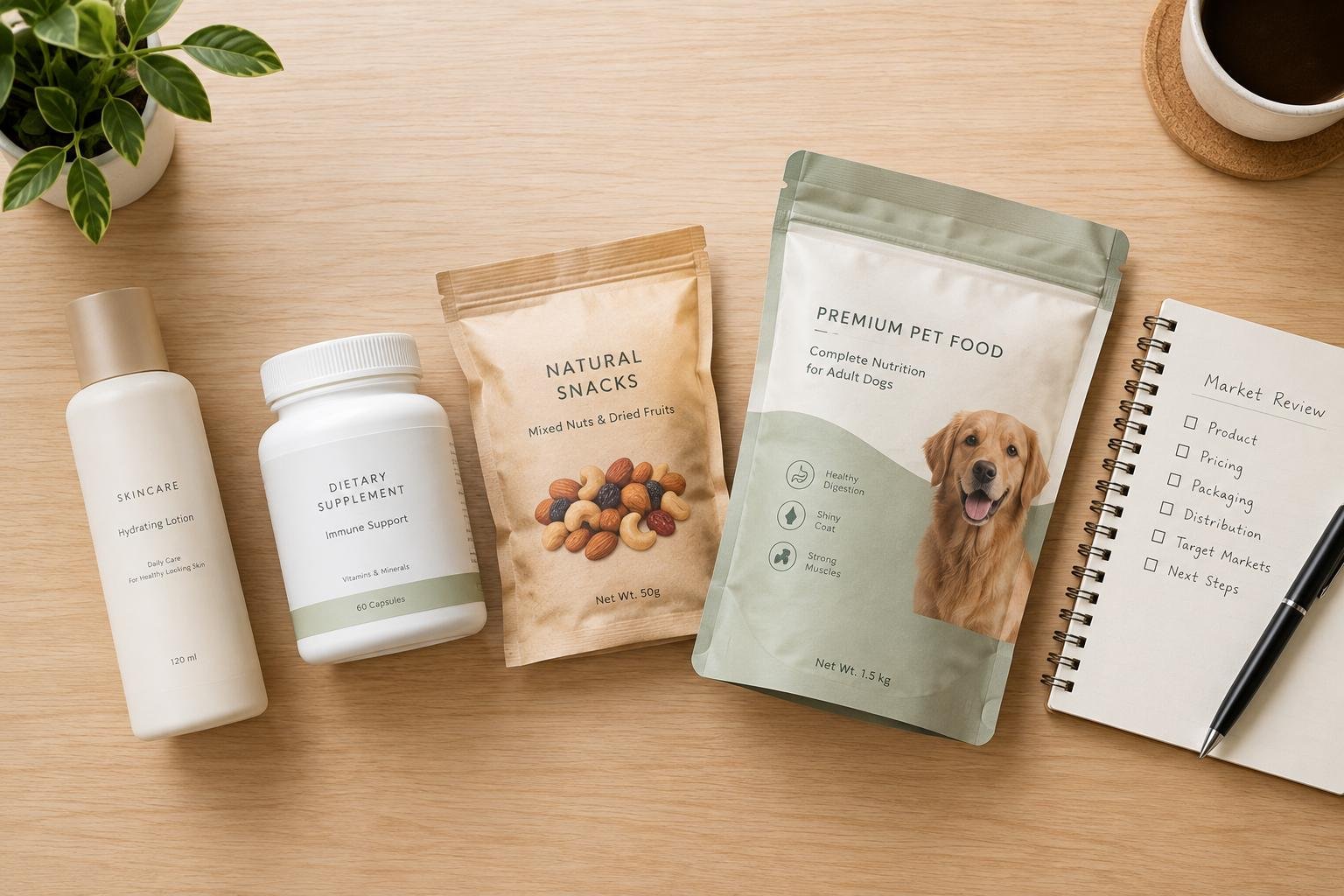
A skincare brand and a snack food brand entering the same Vietnamese city have almost nothing in common on the regulatory or channel side, despite both technically falling under FMCG. Treating “FMCG in Asia” as a single playbook is one of the more common reasons brands misjudge their own entry timeline.
FMCG covers a wide span of categories, and each one carries its own mix of regulation, channel fit, and consumer behaviour across Asian markets. This overview covers the practical starting points that apply across most of them, and where they diverge.
Key Takeaways
- FMCG spans supplements, mums and baby, personal care, food and snacks, pet care, and beverage and alcohol, and each carries different regulatory and channel realities.
- Most established FMCG brands eventually run e-commerce and general trade together rather than relying on a single channel permanently.
- Supplements and food and beverage products typically face the strictest claims and registration requirements, which stretches out their entry timeline.
- Channel choice should follow how a category actually gets discovered and purchased locally, not whichever channel worked in the brand’s home market.
- The realistic starting sequence is regulatory pathway first, demand and pricing validation second, and channel mix last.
What Counts As FMCG in an Asia Market Entry
FMCG is a broader category than the term often suggests. It spans supplements, mums and baby products, personal care, food and snacks, pet care, and beverage and alcohol, and each of these behaves differently once you’re inside a specific Asian market.
A supplement brand and a pet care brand can face entirely different compliance timelines, different platform fits, and different buying behaviour, even when they’re targeting the same country. Lumping them under one generic “FMCG strategy” tends to under-serve whichever category doesn’t fit the assumptions baked into that strategy.
The Sales Channels Available to FMCG Brands
FMCG brands entering Asia typically choose between three broad routes to market, and the right one depends on the category and how much upfront investment the brand is prepared to make.
1. E-commerce Marketplaces
Platforms like Tmall, JD, Shopee, Lazada, and TikTok Shop offer a faster, lower-commitment way to test demand before committing to physical retail infrastructure. This is usually the starting point for categories that get discovered and researched online before purchase.
2. General Trade and Physical Retail
Selling through a distributor into physical retail typically requires more upfront investment and partner relationships, but it builds broader physical availability than e-commerce alone can achieve. Categories driven by impulse purchase or in-store discovery tend to depend more heavily on this route.
3. A Hybrid of Both
Most established FMCG brands eventually run both channels together rather than choosing one permanently. E-commerce validates demand and builds initial traction, while general trade extends reach once the model is proven.
Brands leaning toward the distributor route usually need help with distribution solutions to identify and vet the right trade partners, while brands starting e-commerce-first typically need e-commerce support across Asia’s major marketplaces to get a store built, listed, and actually performing.
Why Regulatory Requirements Are Category-Specific
Compliance requirements differ sharply by FMCG category, and understanding which bucket a product falls into shapes how long the entry timeline realistically needs to be.
| Category | Typical Compliance Burden | What This Usually Means |
| Supplements | Highest | Strict claims and registration requirements, longest lead time |
| Food and beverage | Highest | Strict claims and registration requirements, longest lead time |
| Personal care | Moderate | Claims and labelling checks, moderate lead time |
| Food and snacks | Lower to moderate | Often clears customs and registration faster than regulated categories |
A claim that’s standard on Western packaging can be non-compliant, or simply illegal to state, in a target Asian market, which is why compliance needs to be resolved early rather than treated as a final-mile task before launch.
How Channel Choice Shifts By Category
A supplement brand and a snack food brand can face very different channel realities in the same market. One might be e-commerce-led because of how the category is discovered and researched online before purchase, while the other might depend heavily on physical retail presence and impulse purchase behaviour in-store.
This is why a generic “FMCG in Asia” channel strategy tends to under-serve specific categories. The right channel mix should be built around how the category actually gets bought, not a template borrowed from a different product entirely. Getting this part right often overlaps with broader localised brand and marketing work, since the content and positioning that drives discovery on one channel rarely translates directly to another.
A Practical Sequence for Getting Started
For most FMCG brands, the practical sequence is the same regardless of category, even though the specifics change.
Confirm the category-specific regulatory pathway first, since this usually sets the realistic timeline for everything that follows. Validate demand and pricing for the specific market next, using category-specific data rather than broad FMCG forecasts. Then choose a channel mix that matches how the category is actually discovered and purchased locally, rather than defaulting to whichever channel worked at home.
This sequence is also where a structured go-to-market plan for Asia tends to save the most time, since it forces the regulatory, demand, and channel decisions to happen in order instead of being figured out mid-launch.
Matching Your FMCG Category to the Right Entry Plan
There’s no single channel or regulatory pathway that fits every FMCG category, and the brands that get this right are the ones that plan around their specific category’s realities rather than a generic FMCG playbook.
If you’re not sure which channels or compliance requirements apply to your specific product category, talk to our team about your Asia market expansion before locking in a launch timeline.
